



Digital Nomad Visa guide to Azerbaijan
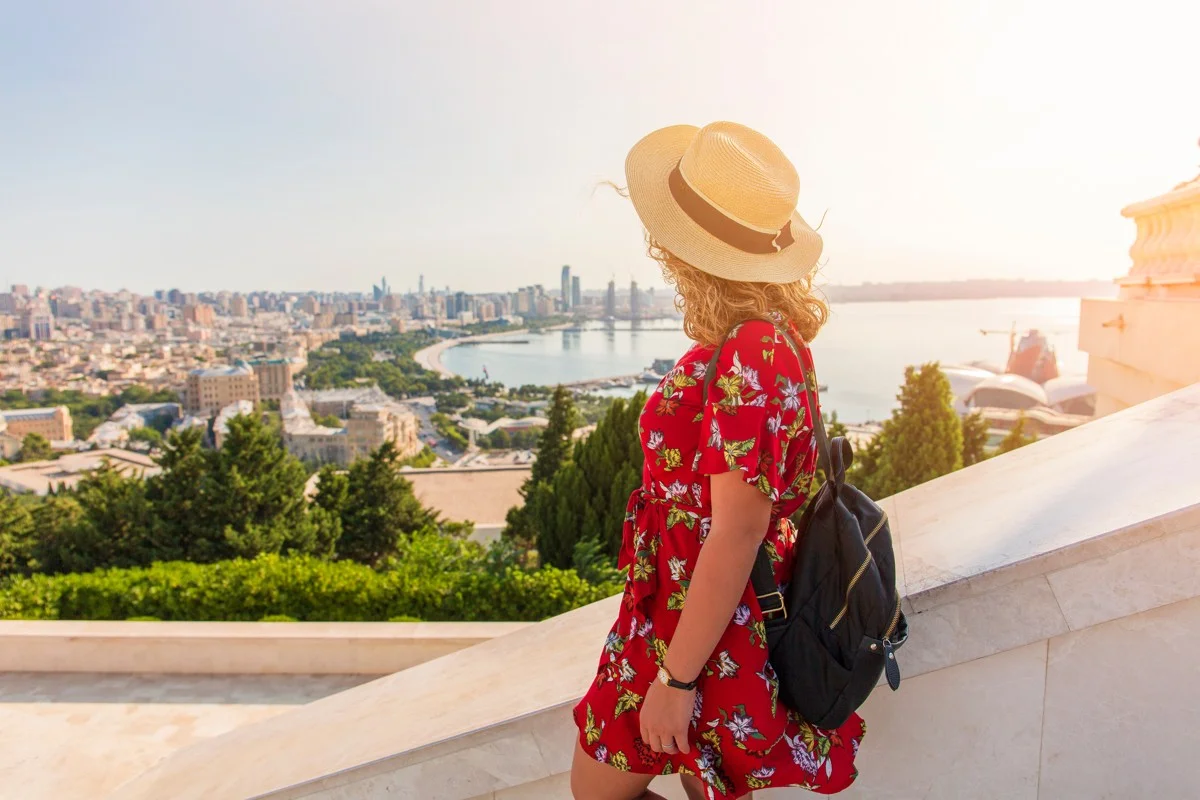
Is Azerbaijan a good country for digital nomads?
New Dubai, the land of Fire, the city of winds — all these are named Azerbaijan, and its capital city of Baku. Go by Azerbaijan, it is a stunning, starkly underrated travel destination, a country that, thanks to its income from the booming oil industry, is developing at a rapid pace. A country where a surprisingly modern high-tech capital meets a millennia of history and baffling natural phenomena — mud volcanoes, to ingest, name one.
So let's take a closer look at Azerbaijan: where is it even located, let's take a look at its history, its culture, where to stay, what to do, and of course, visa options. As always, you will find the timestamps down below so you can jump back and forth between topics, as well as links to the activities that I mentioned, and of course, any other resources you might need to organize your digital nomad lifestyle.
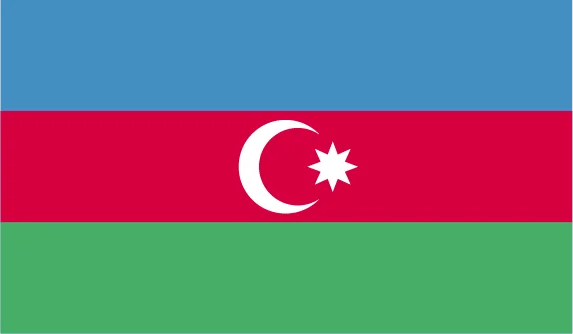
Azerbaijan, officially the Republic of Azerbaijan, is a transcontinental country located at the boundary of Eastern Europe and Western Asia. It is part of the South Caucasus region and is bordered by the Caspian Sea, Russia, Georgia, Armenia, Turkey, and Iran.
The language spoken in Azerbaijan is Azerbaijani, with quite a few people also being able to speak Russian. English, however, is not widely spoken at all. Younger people in the capital of Baku, as well as people working in the tourism industry, will most likely be able to communicate a little — but that is it. Your best bet is to bring Google Translate and smile.
The currency used in Azerbaijan is the Azerbaijani manat, with one US dollar currently translating to 1.7 Azerbaijani manat. Internet is of good speed and widely available in Baku, though, as always, I would suggest buying a local SIM card to ensure access everywhere via a personal hotspot, particularly because mobile internet tends to be faster than broadband infrastructure.
If you arrive by air, you will most likely land at the Heydar Aliyev International Airport in Baku. For travel within the country, overland buses and minibuses are the most common and inexpensive option. Unless you decide to take a rental car, you will need an international driver's license to rent a car. Another option is train travel — the train network is less extensive, and the trains are slower than what you might be used to. One place you can only reach by domestic flight is Nakhchivan, the capital of the autonomous Nakhchivan Republic of Azerbaijan. This is due to the closed borders between Armenia and Azerbaijan and the whole slightly messy post-Soviet border situation in the region.
Accommodation offerings are the usual ones, particularly in Baku. You will be able to find some nice Airbnbs and hotels, though hostels are not very common. If you decide to travel more remotely, simple guest houses and homestays — which will allow you to experience much more of the authentic life of the majority of the population — will be the most likely option.
You should probably be aware that if you are traveling in Azerbaijan for more than 15 days, you will need to register. If you're staying in a hotel, your hotel is able to help you with this. If you are staying in an Airbnb, however, you will have to do so yourself, either at the migration service office or online. Failing to register will result in you being fined when you're trying to leave the country, and potentially lead to being banned from entering the country for a couple of years.
Alright, let's take a look at the cost of living. As always, my numbers come from Numbeo and are translated to dollars because I feel that that is the most relatable currency for most people watching. One important thing to know, probably, is that Baku is actually the most expensive city in the former Soviet Union. A family of four is estimated to pay 1,541 US dollars per month without rent, and a single person is estimated to pay 437 US dollars per month without rent.
So let's break that down a little, shall we?
A meal in an expensive restaurant will cost 5 US dollars and 88 cents. A cappuccino will cost 2 US dollars and 75 cents. A monthly transport pass will cost 11 US dollars and 76 cents. Taxi starting tariffs are 94 cents, and a one-kilometer taxi ride will cost you 59 cents. Basic utilities for an 85-square-meter apartment would cost you 51 US dollars and 27 cents per month, and internet would cost you 16 US dollars and 34 cents per month.
A one-bedroom apartment in the city center would cost you 280 US dollars and 55 cents per month — these are rental prices, not Airbnbs. A rental apartment outside of the city center would cost you 165 US dollars per month. Since I've just mentioned that Baku is significantly more expensive than the rest of the country, I have also taken out the rental prices particularly for Baku, which are as follows:
A one-room apartment in the city center would cost you 330 US dollars per month, and a rental apartment outside of the city center (one bedroom) would cost you 192 US dollars per month.
So you see that there is quite a difference in where you choose to stay when it comes to rental prices. Here, the most likely base for you is Baku, the capital, and this “City of Winds.” While the digital nomad and expat community is still quite small here, it does exist, and this would be the place where you are most likely to make new connections with its 2.2 million inhabitants. The modern capital also is the place where you will find the most reliable digital nomad infrastructure, such as reliable internet and a good choice of housing.
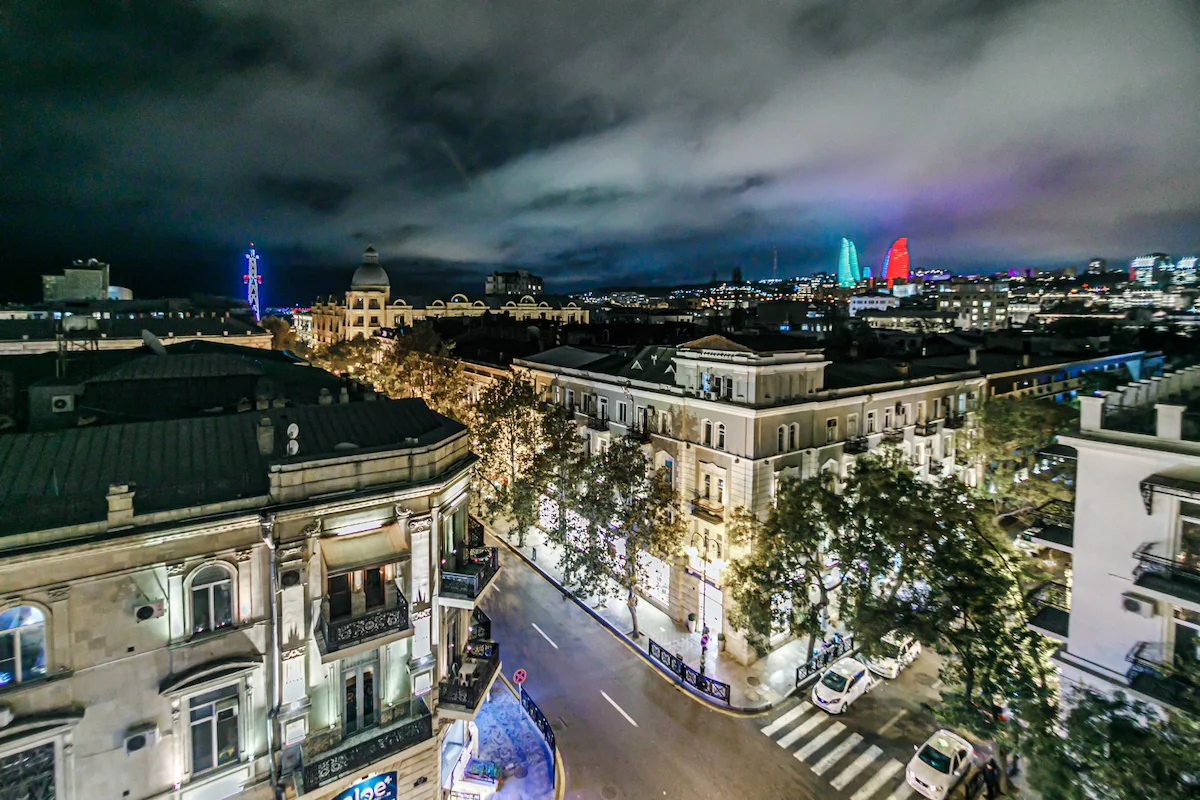
Plus, even though it is quite a workable city, Baku also has a very modern metro system that will allow you to get around easily and inexpensively. Baku is a city of contrast. The Lonely Planet actually called it the love child between Paris and Dubai, while others just refer to it as the “Noodle City.” Visually, it is a mixture of Parisian belle époque architecture, Dubai-esque hyper-modern skyscrapers, and architectural pieces of art that will leave you in awe, and the traditional, authentic, and beautiful Old Town that pays homage to the roots of the region.
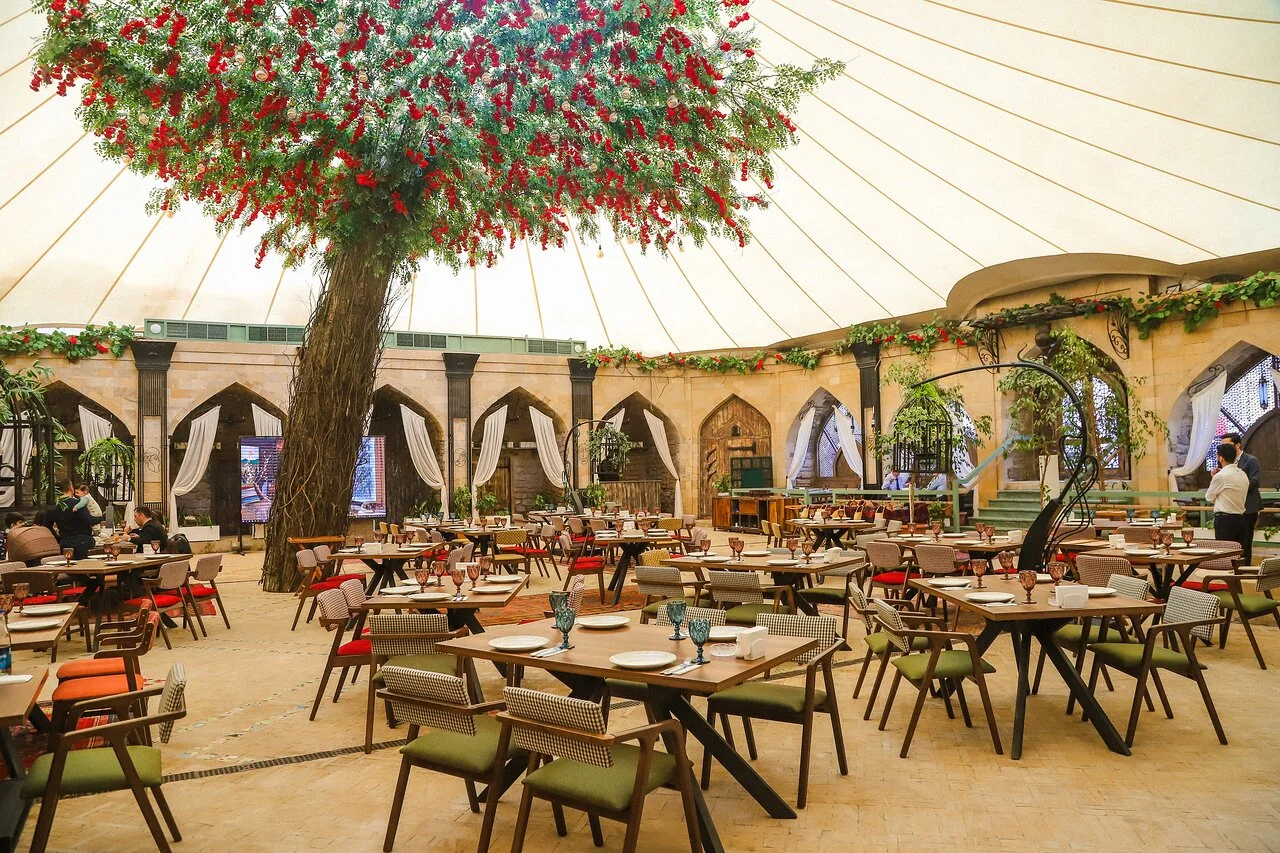
The city is very tidy and clean, with many modern amenities you would expect in bigger cities: co-working spaces, museums, restaurants, posh wine bars. You will even find Starbucks if that is something you fancy. For you as an original nomad, this means that Baku does have all the modern amenities you might want or need for your lifestyle.
A nice place to go for a walk is the boulevard, the promenade along the Caspian Sea. There are some parks and fountains lining the boulevard, as well as restaurants that invite passersby to sit down and enjoy the view. Just remember that Baku is called the city of winds for a reason, so make sure to bring an extra layer of clothing.
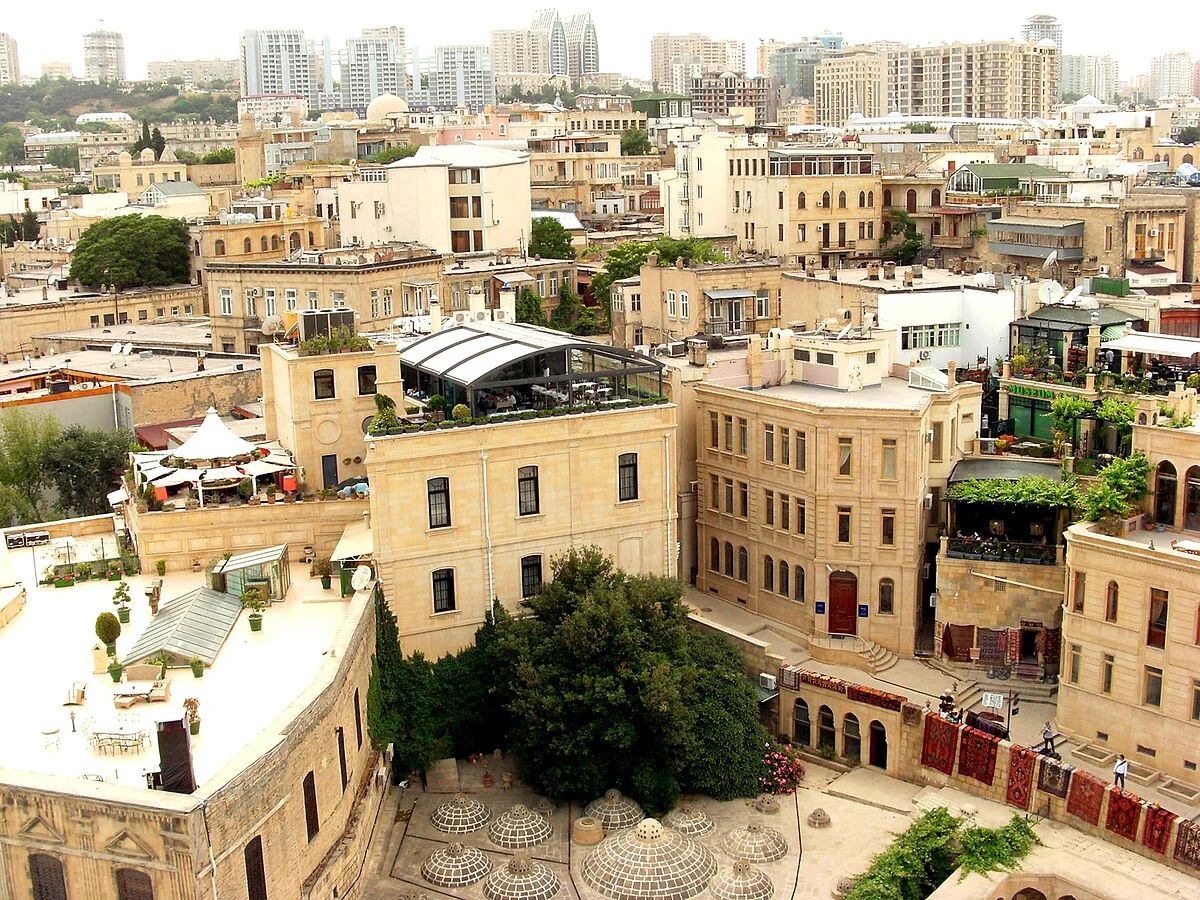
Then, of course, there is the 12th-century walled Old Town, Icherisheher, which is listed as a UNESCO World Heritage site and is also a good place to base yourself. The small streets, the smells, the shops — such a stark contrast to modern Baku. In its center, you will find the Palace of the Shirvanshahs, which was built here in the 15th century. Wonder at the beautiful complex and marvel at the ancient buildings, not only the palace itself but also two beautiful mosques, two mausoleums, and the ruins of several bathhouses. To get a perfect view over the city, take the funicular up to Upland Park — it's a beautiful area to take a nice afternoon walk and then enjoy the evening view over the harbor and the sea.
Then, of course, there is the other element that plays a big role in Azerbaijani culture: fire. You will already have seen homage being paid to it in Baku, with the most famous skyscrapers of the city being the Flame Towers. But the worship of fire is an ancient one here. To learn more about it, visit the Fire Temple of Baku, also called Ateshgah of Baku. This is a castle-like Hindu-Zoroastrian and Sheikh temple in Surakhani town, a suburb of Baku, dating back to the 17th and 18th centuries. Visitors worship the Eternal Flame burning here, which was fed by the petroleum reserves underground. Since the 1960s, that flame is actually fed by a man-made gas line, but the effect is still very impressive. The temple has been turned into an interesting museum explaining the old rituals and beliefs.
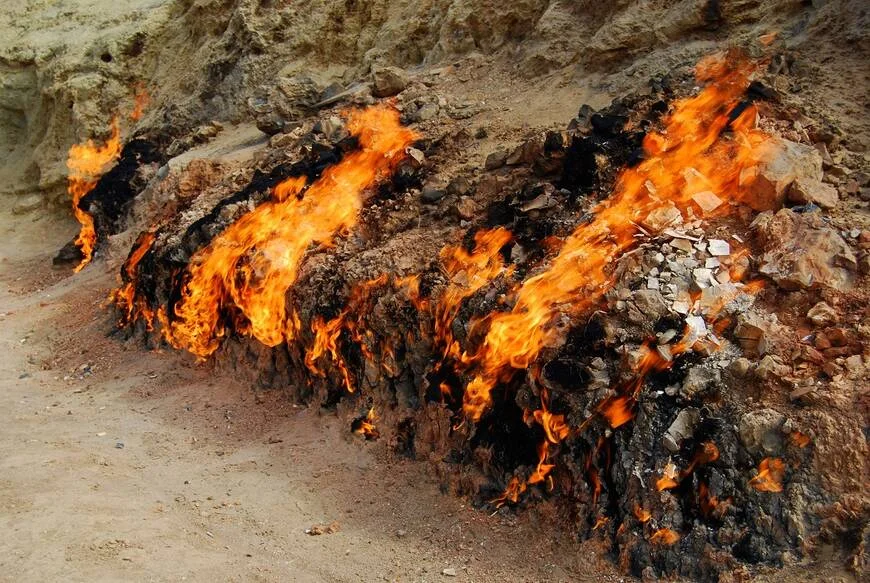
Let's take a look at some things to do outside of Baku and discover the country a little. First on the list: Yanardag. This is probably the most famous tourist attraction in the entire country — the Mountain of Fire, the Eternal Flame. Apparently, in the 1950s, a shepherd carelessly flipped a cigarette here, and it ignited the gas that is oozing out of the Earth. The flame has been burning ever since. There used to be many of these sites in the entire country, but with the exploitation of natural gas, many have gone out. That being said, whether or not it is really worth a visit is up to you. The mountain, as it is called, is more of a tiny hill, and on its side stretches the burning flame. If you decide to come here, it probably really elevates your experience if you do so after dark.
Escape the modern conundrum of Baku and travel back in time to when the Silk Road was the economic lifeline of the area by spending a day and at least one night in the town of Sheki. Sheki was a famous stop on the Silk Road. For a special experience, stay in the old roadside inn that used to give shelter to the Silk Road traders. It has been restored in all its glory and allows you to marvel at the craftsmanship of the era while really diving into this amazing historical experience. The beds are relatively basic but inexpensive, and the experience is absolutely worth it.
The next must-see while in Sheki is the UNESCO World Heritage-awarded Summer Palace of the Khans, built in the 18th century. It offers a beautiful insight into that time: colorful painted glass windows, unbelievably detailed Middle Eastern architecture, walls covered with intricately handcrafted carpets, and beautifully painted walls and ceilings. Wander through these halls or take a rest in the shady courtyards that used to be filled with the animals of the Silk Road merchants, and you will feel centuries away from Baku's modern city hustle.
Next, let's look at a really weird natural phenomenon. Azerbaijan has the most mud volcanoes in the entire world. These volcanoes are formed when underground gas makes its way to the surface. They even erupt sometimes, just like real volcanoes, but not on a regular basis. Apparently, when they do, gases move to the surface from the deepest layers of the earth and immediately ignite, producing a flame that can reach a thousand meters in height. What is left is an oozing mud volcano. Interestingly enough, the mud is actually cool to the touch.
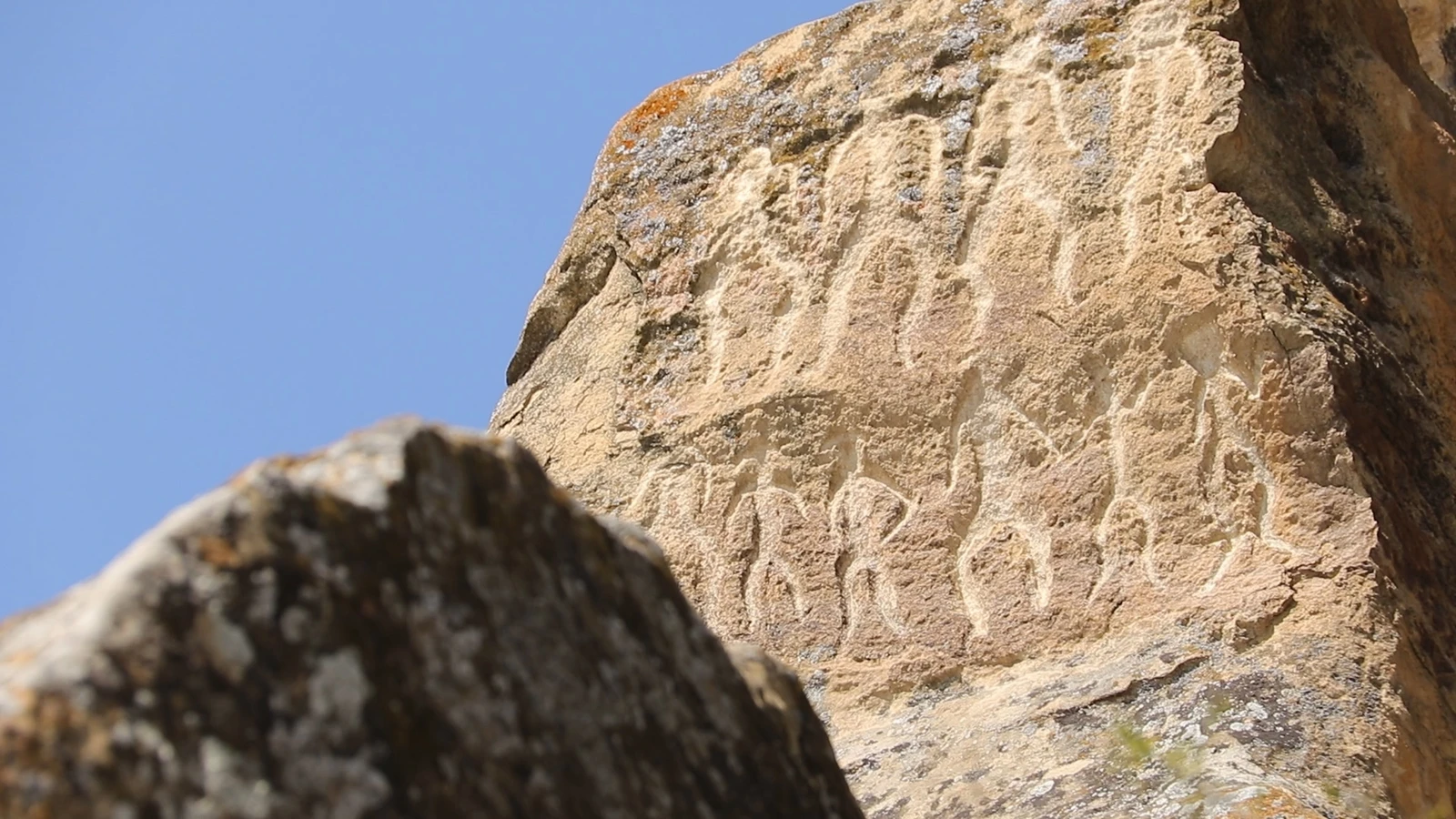
From Baku, the most popular destination to see mud volcanoes is Gobustan National Park, which is a wonderful location for some time in nature as it is. It houses another historically very interesting site: the UNESCO-listed Gobustan Petroglyph Reserve. Come here to admire thousands of rock engravings depicting hunting scenes, people, ships, constellations, and animals. These date back 40,000 years. You can also see the remains of inhabited caves, settlements, and burials here.
To go for some more beautiful hikes in nature, head to the Guba region. Here you will find many small traditional villages and beautiful nature to wander in. One of the most popular destinations here is the impressive Tengi Canyon with its deep walls and green overgrowth. You could also make a stop at Krasnaya Sloboda, the only all-Jewish town outside of Israel inhabited by the so-called Mountain Jews.
Another escape from the summer heat is the small mountain town of Guba. Here you will see the more traditional Azerbaijan and have the possibility to take some wonderful trips into the surrounding nature. A must-visit here is the genocide memorial dedicated to the 12,000 Azerbaijanis killed during the 1918 March Days genocide.
If you're looking for an alternative city to base yourself in, but would prefer a more traditional vibe than Baku offers, maybe Ganja is an option for you. It is Azerbaijan's third biggest city and shows much more of the traditional Azerbaijani architecture. Step by the beautiful 17th-century Chokakamam for some hours of relaxation.
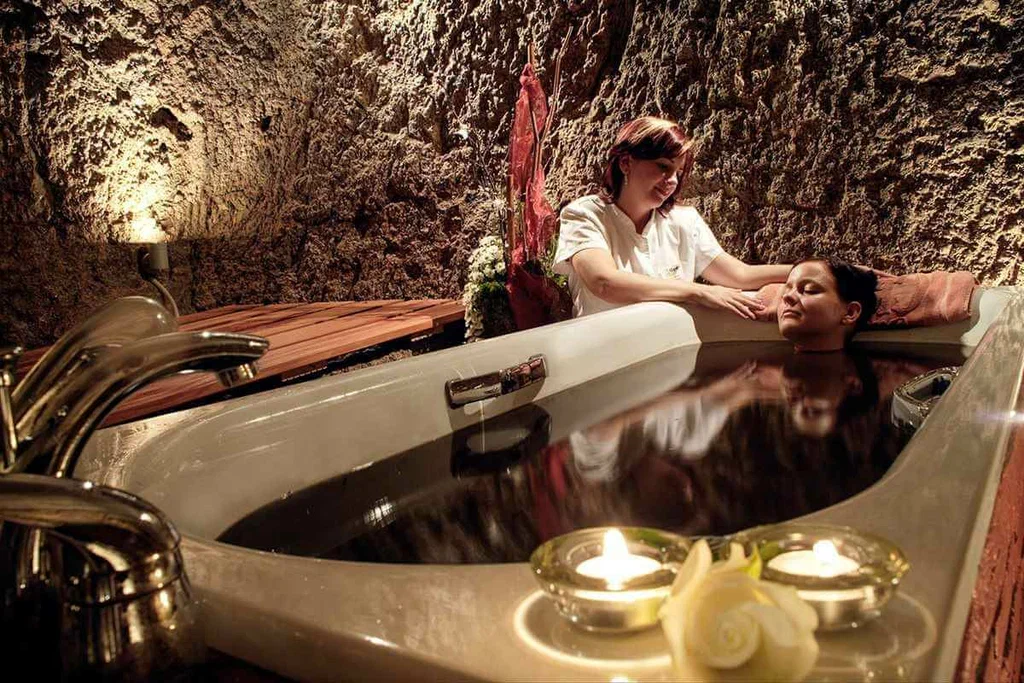
Speaking of relaxation, Azerbaijan has a very famous spa offering that attracts people from all over the region. The city of Naftalan is famous for oil baths. Are you now picturing baths in beautifully fragrantly scented warm oil, maybe some candles and rose petals? You'd be wrong. Naftalan is famous for crude oil baths, as in this stuff they pump out of the earth. The people bathing in it believe it to have healing properties. Now I will have to honestly say that I find this belief questionable and do not see myself taking a crude oil bath in the near or distant future, but it is quite popular. So you should, of course, do your own research and form your own opinion on the topic.
Well, let's look at the visa details then. Azerbaijan is a beautiful country, but unfortunately, at the moment it is also a country where you won't be allowed to stay very long. Visitors from these countries that you see here on the side are allowed to get a visa upon arrival. Alternatively, you might get an e-visa. Pay attention though: while you might mark your day of arrival in the e-visa system, your visa is valid for 90 days, but you are only allowed to stay 30 days. Don't get confused by that. A few citizens from neighboring countries are actually allowed to stay for 90 days, and citizens from Armenia, due to the Nagorno-Karabakh conflict, are unfortunately completely banned from entering Azerbaijan.
The e-visa system itself is quite straightforward. You can just get it on the e-visa portal. Don't forget to have a printout with you in case you are asked for it. That's it, and now you're ready to head to Azerbaijan.
Related

We will arrange a meeting with a World Immigration Hub specialist for you in person or online format
During the meeting, the specialist will:
- Explain how we work and how we can help you.
- Explain the immigration process step-by-step, presenting the roadmap, budget, and financial requirements.
- Share our immigration experience and discuss key points you should know before starting your journey.
- Determine the next steps together with you.
Depending on the project’s complexity, the meeting with the manager may be coordinated with experts, designers, and assistants.
Natalia Kovalenko
Immigration Consultant
Mehman Asadzade
Immigration Lawyer